
Learn how to make delicious homemade Sushi with seasoned rice, nori, salmon, avocado, and cucumber. An easy and flavorful Japanese meal perfect for lunch or dinner.
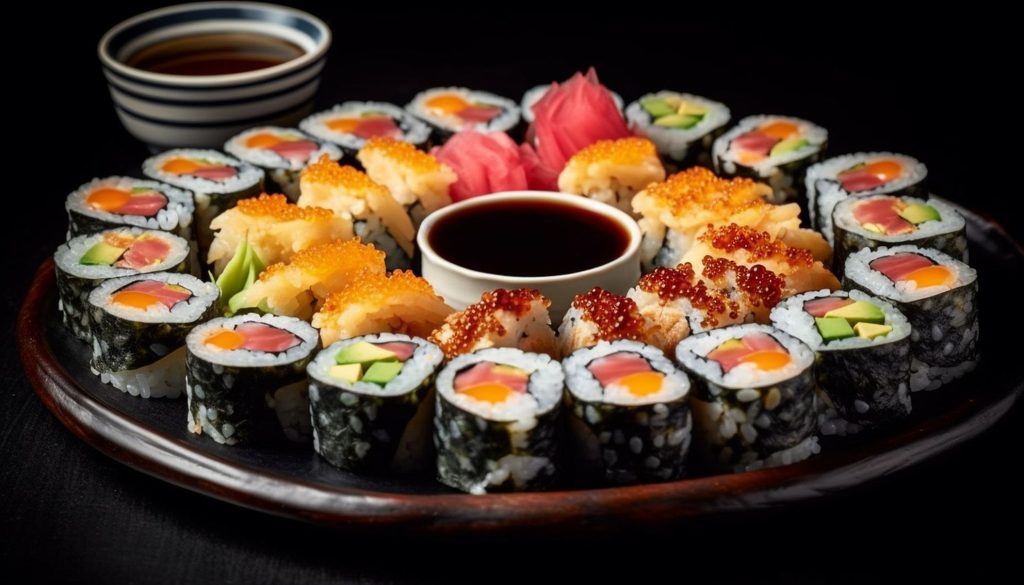
Sushi: What Is It?
The key parts of sushi, a traditional Japanese dish, are genuinely seasoned sushi rice, raw or cooked fish, seafood, vegetables, and seaweed (nori). Among the many types here are nigiri, sushi rolls, and sashimi-style dishes.
Sushi can be devoured as a light meal, lunch, or dinner and is generally served with pickled ginger, wasabi, and soy sauce.
These Same Nutritionally Balanced Advantages Of Sushi
01. An Appropriate Level Source
Sushi’s fish and seafood contain added nutrients, that is considered to support the body’s tissues and muscles.
02. Better Fats
It is truly the case that omega-3 fatty acids, which are crucial for heart and brain health, are discovered in fatty, oily fish.
03. Has Vital Nutrients
Nutrients are found in a wide range of foods, such as seaweed, cucumber, avocado, and fish.Minerals are another advantage of seaweed. Iodine and easily trackable amounts of vitamins and minerals have been found in nori.
04. Vegetables Are An Exemplar Of This.
Having made sushi with cucumber, avocado, carrots, or other vegetables can add a variety of nutrients and fiber to the meal.
05. Perhaps A Portion Of A Great Meal
When rice, veggies, and fish are combined, sushi can become a variation of carb-rich foods.
06. Would Comprise Important Nutrients
Nutrients, minerals, and other compounds can really be found in a wide variety of foods, which include seaweed, cucumber, avocado, and fish.
07. Maybe A Tiny Part Of A Great Meal
Adding rice, vegetables, and fish to sushi can make it a healthy meal.
Tips For Making Sushi
- Even so, sushi rice is a good source of energy even though it does contain carbohydrates.
- Carrots, avocado, cucumber, or other vegetables in sushi can offer a lot of nutrients and fiber.
- Another source of minerals is seaweed. Nori contains trace levels of iodine, vitamins, and minerals.
- Sushi rice is a good source of energy even though it consists of carbohydrates.
- Keep your knife very slightly damp: Clean slices seem to be simpler to implement with a sharp, slightly moistened knife.
- Use fresh ingredients: If using raw fish, make absolutely sure that it’s also properly refrigerated and choose fish specifically advertised as also being suitable for raw consumption.
- Even though sushi is best consumed as fresh, especially when it contains raw seafood, serve it immediately after ordering.
- Try experimenting with various fillings, like cooked seafood and vegetables, cucumber and avocado, or salmon and avocado.
🍣 FAQ: Sushi
01. Are Those Flavors Actually Required To Create Sushi?
Seasoned rice, nori seaweed, and fillings the same as avocado, fish, or vegetables are used to eat sushi.
02. Is It Useful To Make Sushi Without Ever Using Raw Fish?
Conversely. Sushi can be made with cooked salmon, cooked shrimp, crab, egg, cucumber, avocado, or other vegetables.
03. Exactly What Sort Of Rice Works The Best For Sushi?
The best sushi rice is short-grain because it is adequately sticky to maintain the roll together.
04. Can I Start Preparing Sushi Without A Sushi Mat?
Likewise. Sushi can be carefully rolled by hand, and yet rolling is made much easier and more consistent with such a bamboo sushi mat.
05. How Long Is Homemade Sushi Nice For?
Sushi should be devoured briefly after preparation for optimum quality and food safety. Sushi foods containing seafood ought not be dried at room temperature for a longer length of time.
06. With What Else Should I Serve Sushi?
Sushi was often served with pickled ginger, wasabi, and soy sauce. It can also be served with miso soup or a clear and simple vegetable side dish.
07. Can I Bake Brownies In Advance?
Although some ingredients can be prepared, sushi is being used. finest assembled right before serving, especially when seafood is used
08. When I Cut My Sushi, Why Does It Fall Into Pieces?
The rice it could be not adequately sticky, the roll may be overfilled, or loosely rolled. Firmly rolling and leveraging
Sushi
Ingredients
- 2 cups sushi rice
- 2½ cups water
- 3 tbsp rice vinegar
- 1 tbsp sugar
- ½ tsp salt
- 4 –5 nori sheets
- 150 g fresh or cooked salmon sliced into strips
- 1 cucumber cut into thin strips
- 1 avocado sliced
- Soy sauce for serving
- Wasabi optional
- Pickled ginger optional
- Sesame seeds optional
Instructions
- Cook the sushi rice: Rinse the sushi rice several times until the water runs mostly clear. Cook with water according to the rice package instructions.
- Season the rice: Mix rice vinegar, sugar, and salt. While the rice is still warm, gently fold in the vinegar mixture. Let it cool to room temperature.
- Prepare the filling: Cut the cucumber, avocado, and salmon into thin strips.
- Place the nori: Put a sheet of nori on a sushi mat with the rough side facing upward.
- Add the rice: Spread a thin, even layer of cooled sushi rice over the nori, leaving about 2 cm uncovered at the top.
- Add the filling: Place salmon, cucumber, and avocado in a line across the lower third of the rice.
- Roll the sushi: Use the mat to carefully roll the sushi tightly, pressing gently as you go.
- Slice: Use a sharp, slightly damp knife to cut the roll into 6–8 pieces.
- Serve: Serve with soy sauce, wasabi, and pickled ginger if desired.
-
Sushi
Learn how to make delicious homemade Sushi with seasoned rice, nori, salmon, avocado, and cucumber. An easy and flavorful Japanese meal perfect for lunch or dinner. Sushi: What Is It? The key parts of sushi, a traditional Japanese dish, are genuinely seasoned sushi rice, raw or cooked fish, seafood, vegetables, and seaweed (nori). Among the…
Leave a Comment