
Learn how to make Basque Burnt Cheesecake with a rich, creamy center and beautifully caramelized top. An easy Spanish cheesecake recipe perfect for dessert lovers.
What Is Basque Burnt Cheesecake?
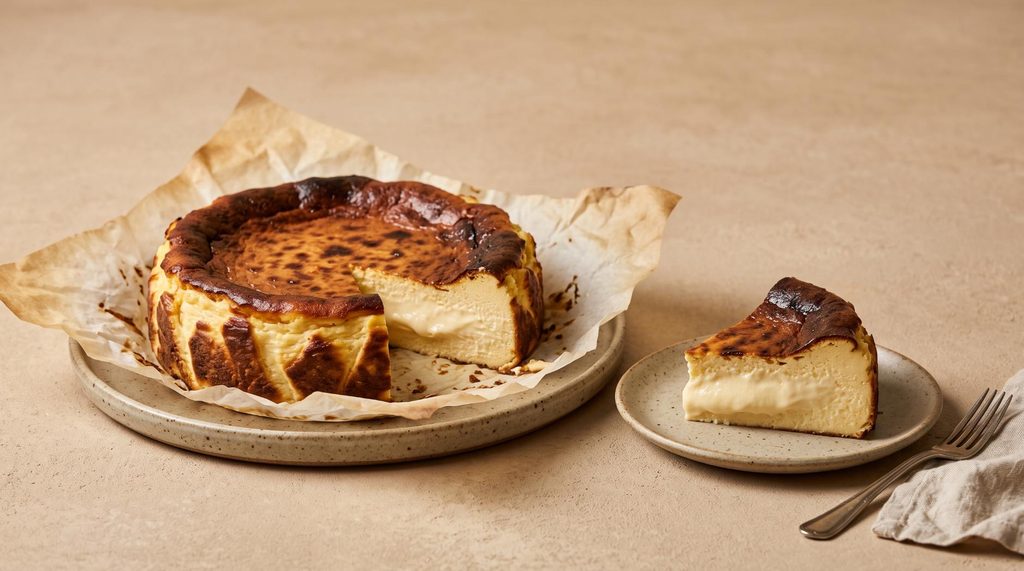
Basque Burnt Cheesecake is a rich and creamy dessert that originated in the Basque region of Spain. Unlike routine cheesecakes, it is baked at a high temperature, resulting in a lusciously caramelized, deep golden-brown top and a soft, smooth, custard-like core. This cheesecake is made with simple ingredients like cream cheese, sugar, eggs, heavy cream, and flour, and it has a wonderful mix of sweetness and creaminess. Its rustic appearance, slightly burnt exterior, and melt-in-your-mouth texture make Basque Burnt Cheesecake a popular dessert loved by cheesecake enthusiasts around the world.
Health Benefits Of Basque Burnt Cheesecake
Basque Burnt Cheesecake is a marvelous rare treat made from cream cheese, eggs, heavy cream, and sugar. While it is best relished as an occasional treat, the dairy and egg components provide some nutritional value.
- Provides Calcium: Cream cheese supports healthy bones and teeth. Heavy cream contains calcium, which helps maintain
- Protein: Eggs and cream cheese provide protein, which assists in muscle maintenance and correct physical tasks.
- Provides Vitamin B12: Dairy products and eggs contain vitamin B12, which supports nerve function and red blood cell formation.
- Rich in Vitamin A: Cream cheese, cream, and eggs contain vitamin A, which encourages normal vision and immune function.
- Provides Energy: The combination of dairy, eggs, and sugar provides energy for everyday tasks.
Enjoy in Moderation: Basque ” for the entire Cheesecake is with the a tasty dessert high calorie, saturated fat, and added sugar material. People who consume a know what it means as part of a balanced diet is a reasonable approach to enjoy this delightful cheesecake.
Tips For Making Basque Burnt Cheesecake
- Use Room Temperature Ingredients: Bring the cream cheese, eggs, and heavy cream to room temperature before trying to combine. This helps in producing a smooth, lump-free cheesecake batter.
- Vote for Full-Fat Cream Cheese: For a rich, creamy texture and marvelous flavor, choose elevated full-fat cream cheese.
- Don’t Overmix: Mix the ingredients until just barely melded. Overmixing could perhaps start introducing too much air, affecting the overall texture.
- Line the Pan Properly: Position 2 parts of parchment paper above the pan’s edges. This gives the cheesecake its unique rustic look and makes separating easier.
- Bake at a High Temperature: Bake at 220°C (425°F) to get the unique deeply caramelized top while keeping the center creamy.
- Supervise the Baking Time: Keep an eye on the cheesecake in the final minutes of baking. The top should be dark golden brown, and the center should still wobble mildly.
- Don’t Worry About Cracks: Unlike traditional cheesecakes, Basque Burnt Cheesecake is supposed to have a rustic appearance. Cracks and an uneven surface are part of its charm.
- Allow to Cool Naturally: Let the cheesecake cool at room temperature before refrigerating. This means allowing it to properly set and attain a creamy texture.
- Refrigerate Before Serving: Refrigerate the cheesecake for at least 4 hours or overnight to accomplish a firmer texture and excellent flavor.
- For Clean Slices, Dip a Sharp Knife in Warm Water and Wipe Dry Between Cuts.
- Serve at the Absolutely Right Temperature: To attain an extra creamy texture, let the cheesecake sit at room temperature for 15-20 minutes before serving.
- Proper Stockpiling: Chill leftover cheesecake in an airtight container and wolf down within 3-4 days.
Frequently Asked Questions Basque Burnt Cheesecake
01. Why Is Basque Burnt Cheesecake Called Burnt Cheesecake?
Basque Damaged Cheesecake is given the name only by extremely caramelized, golden yellow top, which makes it appear when the cheesecake is baked at a high temperature.
02. How Does Basque Burnt Cheesecake Differ From Conventional Cheesecake?
Basque Burnt Cheesecake, unlike other cheesecakes, has no crust, a rustic appearance, a caramelized exterior, and a soft, creamy décor.
03. Should Basque Burnt Cheesecake Be Jiggly In The Middle?
Yes. When users begin taking this out of the oven, the centre should wobble slightly. It will continue to consolidate whenever the cheesecake cools.
04. Can I Prepare Basque Burnt Cheesecake Ahead Of Time?
Yes. It can be ready the next day and stored in the fridge overnight. This allows the cheesecake to properly set and start producing a much more sturdy flavor.
05. Do I Need A Water Bath For Basquer Burnt Cheesecake?
No. Unlike many quintessential cheesecake recipes, Basque ” for the entire Cheesecake does not contact for the a water bath.
06. Can I Use Lower-Fat Cream Cheese?
Full-fat cream cheese is favoured as it tries to add the rich flavor and creamy texture that make a distinction this food. Low-fat cream cheese may lead to a different consistency.
07. How Can I Tell When Basque Burnt Cheesecake Is Done?
The top should be a super-rich golden brown, and the edges should seem set while the center would be slightly jiggly.
08. Why Did My Basque Burnt Cheesecake Crack?
Small cracks are completely normal. They can develop as the cheesecake cools and its structure settles. They are part of its rustic appearance.
09. How Should I Store Basque Burnt Cheesecake?
Store the cheesecake in an airtight container in the refrigerator for approximately 3–4 days.
10. Can I Freeze Basque Burnt Cheesecake?
Yes. Allow it to cool completely before encasing individual slices closely and cooling for up to two months for a good understanding. Thaw overnight in the refrigerator before serving.
11. Can I Make Basque Burnt Cheesecake Without Flour?
Yes. You can completely eradicate the flour or replace it with a gluten-free flour alternative. The texture may be quite different.
12. What Can I Serve With Basque Burnt Cheesecake?
It tastes delicious with fresh berries, strawberries, raspberry sauce, whipped cream, or a light dusting of powdered sugar.
Basque Burnt Cheesecake
Ingredients
- 500 g cream cheese softened
- 1 cup 200 g granulated sugar
- 4 large eggs room temperature
- 1 ½ cups 360 ml heavy cream
- ¼ cup 30 g all-purpose flour
- 1 teaspoon vanilla extract
- ¼ teaspoon salt
- Butter or baking spray for greasing the pan
Instructions
- Preheat the Oven: Preheat your oven to 220°C (425°F). Line a 9-inch (23 cm) springform cake pan with two sheets of parchment paper, allowing the paper to extend above the edges.
- Beat the Cream Cheese: In a large mixing bowl, beat the softened cream cheese and sugar until completely smooth and creamy. Avoid overmixing.
- Add the Eggs: Add the eggs one at a time, mixing well after each addition until fully incorporated.
- Add the Cream: Slowly pour in the heavy cream and mix until the batter becomes smooth.
- Add the Dry Ingredients: Sift in the flour and salt. Add the vanilla extract and gently mix until everything is combined without lumps.
- Pour into the Pan: Pour the cheesecake batter into the prepared pan. Gently tap the pan on the counter to release any large air bubbles.
- Bake the Cheesecake: Bake for approximately 45–55 minutes, until the top becomes deeply golden brown or nearly burnt while the center remains slightly jiggly.
- Cool Completely: Remove the cheesecake from the oven and let it cool in the pan at room temperature. The center will continue to set as it cools.
- Chill Before Serving: Refrigerate for at least 4 hours, preferably overnight, for the best texture and flavor.
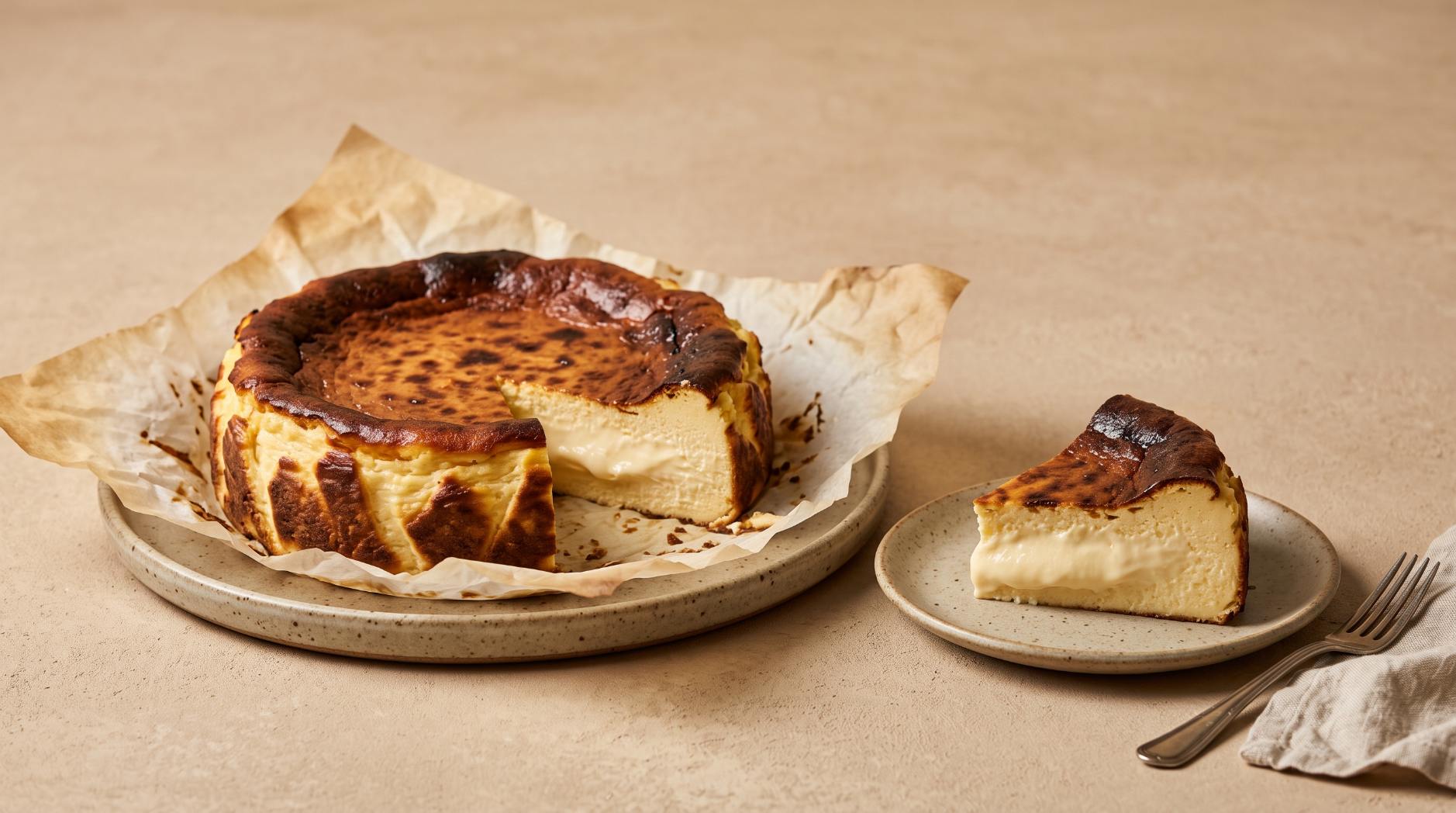
- Serve and Enjoy: Carefully remove the cheesecake from the pan, slice, and serve. Enjoy its rich, creamy center and beautifully caramelized top!
-
Basque Burnt Cheesecake
Leave a Comment