
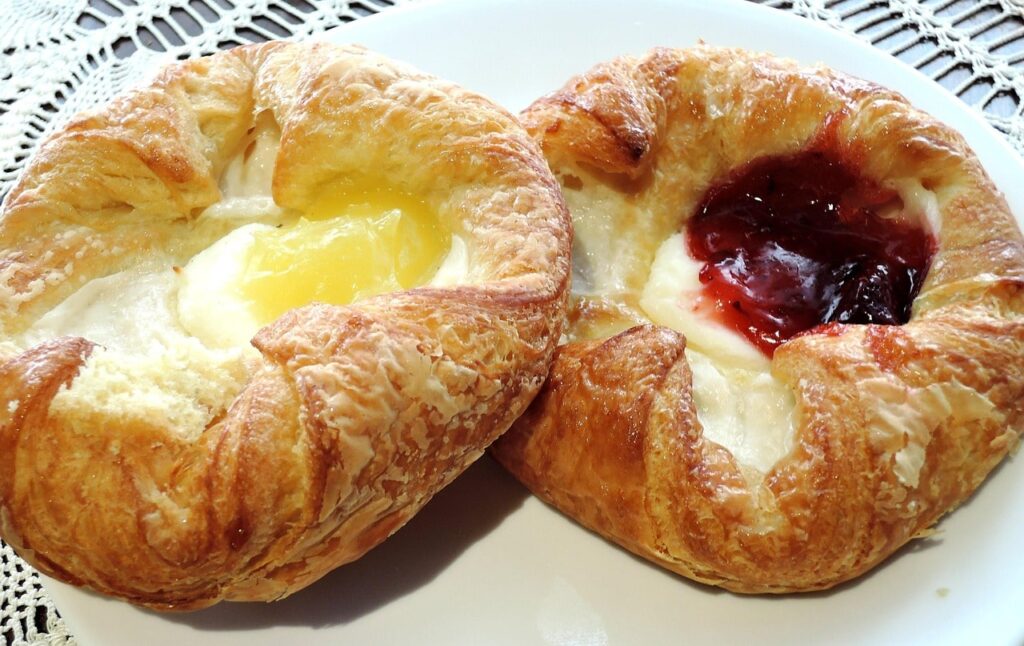
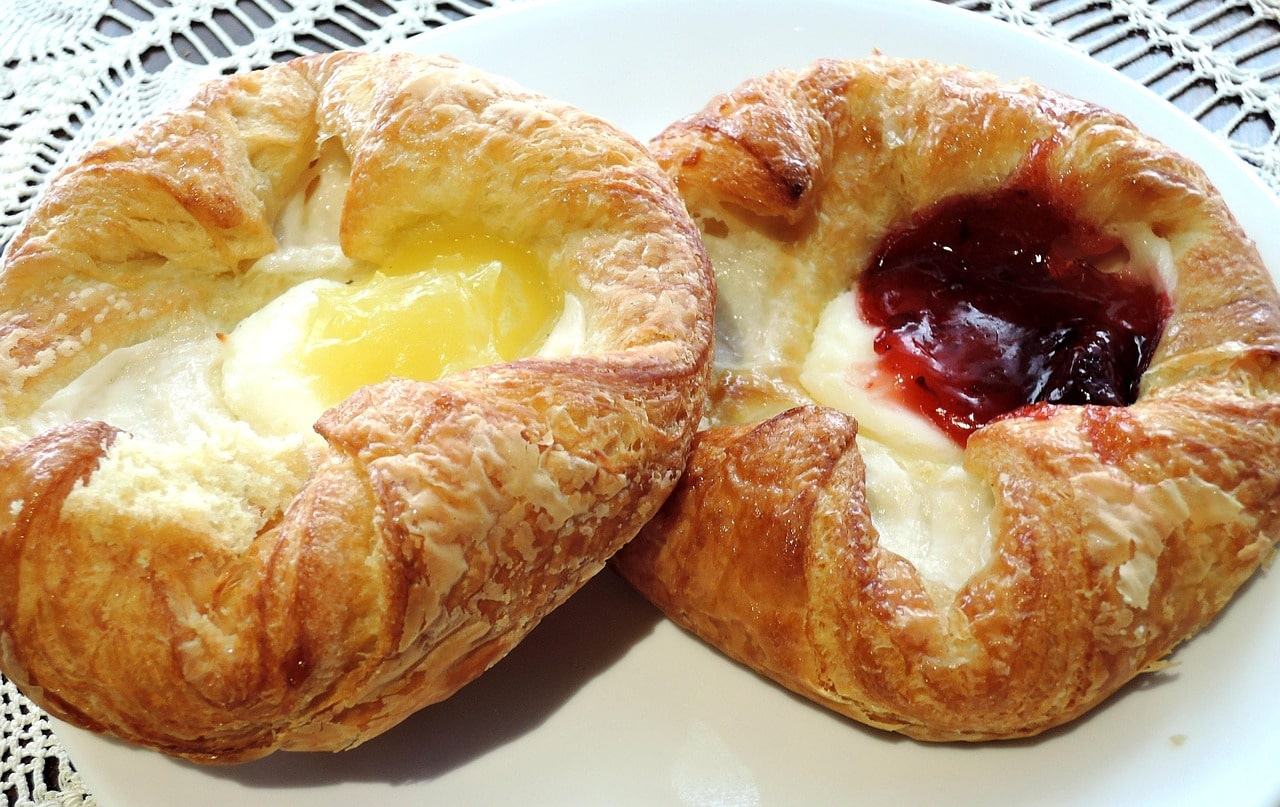
Flaky, buttery Danish pastry filled with cream, custard, or fruit. Easy step-by-step recipe and shaping tips included.

Danish Pastry: what Is It?
Danish pastry is made from a laminated dough, which is layered with butter by repetitively rolling and folding the dough. It is light, flaky, and sweet. The crispy, airy layers that look similar to pastries are generated by this process. It is often filled with sweet fillings such as:
- Fruit jam
- Pastry cream
- Cream cheese
- Custard
- Almond paste
Danish pastries are usually shaped in decorative forms like pinwheels, braids, or envelopes, then baked until golden and flaky. They are commonly finished with glaze or powdered sugar.
01. Where It Comes From
Although it is called “Danish”, the pastry actually has roots in AustriaA. In the 19th century, Austrian bakers managed to bring the laminated dough technique to Denmark, where it evolved into the modern pastry. For its Austrian roots, Danes refer to it as “wienerbrød,” which means “Vienna bread.”
02. Examples Of Popular Danish Pastries
- Cheese Danish
- Raspberry Danish
- Apple Danish
- Almond Spiral
- Custard Flower
Health Benefits Of Danish Pastry
Although Danish pastries are considered a treat rather than a health food, they still provide some nutritional benefits:
01. Provides Quick Energy
Danish pastries contain carbohydrates and sugar, which the body can convert into quick energy.
Those who have a convenient breakfast or snack when they need energy in the body.
02. Contains Butter, A Source Of Good Fats
Even though butter includes a lot of saturated fat, it also offers:
- Vitamin A (promotes healthy skin and eyes)
- As an antioxidant, vitamin E
- Omega fatty acids in trace amounts
These can encourage hormone balance and appropriate cell function once taken in moderation.
03. If Cream Cheese Or Custard Is Used, It Might Provide Calcium And Protein.
Cheese and pastry cream fillings add:
- Protein: aids in body repair and muscle growth
- Calcium keeps teeth and bones strong.
04. Fruit-Filled Danish Provides Antioxidants
If the pastry includes fruit jam or fresh fruit, it may provide:
- Vitamin C
- Fiber
- Antioxidants
These help support immune function and digestive health.
05. Enjoyment And Mood Benefits
Foods that taste good and are shared with others can help:
- Improve mood
- Reduce stress
- Create positive eating experiences
Enjoyment is also a part of a balanced lifestyle.
06. However — Keep These Things In Mind
Danish pastries can also be:
- High in sugar
- High in butter
- High in calories
So they are best enjoyed in moderation, rather than every day.
07. Balanced Tip
Pair a Danish pastry with:
- Plain tea or black coffee
- Fresh fruit
- A protein source (such as boiled eggs or yogurt)
This prolongs feelings of fullness and aids in blood sugar regulation.
Advice For Preparing Danish Pastry
01. Keep Everything Cold
- The key is cold butter and dough.
- The pastry won’t be flaky if the butter melts into the dough.
- Work quickly and refrigerate the dough in between folds.
02. Don’t Overwork The Dough
- Knead only until smooth.
- Pastries are becoming tough instead of tender whenever the dough is overworked, bolstering the gluten excessively.
03. Roll Evenly
- Keep a consistent thickness when rolling.
- Uneven rolling leads to uneven baking and layering.
04. Use Good-Quality Butter
- Butter with high fat content creates better lamination.
- Steer well clear of margarine; it won’t provide the same flakiness or flavor.
05. Dust Lightly With Flour
- Use just enough flour on the work surface to prevent sticking.
- The pastry could become dense and dry when there is too much flour.
06. Chill Between Folds
- After each fold, chill for at least 30 minutes.
- This helps to create clear layers and keeps the butter firm.
07. Carefully Proof
- Shaped pastries must rise till they are slightly plump but just not doubled.
- Under-proofed → dense
- Over-proofed → butter leaks during baking
08. Use Egg Wash Correctly
- Brush lightly — do not let egg wash drip down the sides, as it can glue layers together and prevent flakiness.
09. Don’t Overfill
- A small amount of filling goes a long way.
- Pastries that have too much filling will burst open during baking.
10. Bake At High Heat
- Bake at 200°C / 400°F for golden, crisp layers.
- Flakiness is generated by the butter piping hot, thanks to high heat.
11. Extra Advice (Expert Level)
- If butter starts to soften during rolling → put everything in the fridge for 10–15 minutes.
- To maintain a consistent layer, turn the dough 90 ° between those rolls.
- Cut the dough tidily with such a pizza cutter or sharp knife; pressing down seals the layers.
Danish Pastry FAQ
01. What Is Pastry From Denmark?
Laminated dough, which is both is being used to start making Danish pastry, which light, flaky, and buttery. Layers of dough and butter are rolled and folded to generate a soft and crisp texture. Sweet fillings like fruit, custard, or cream cheese have been generally used.
02. Why Is It Called Danish Pastry If It Came From Austria?
The pastry technique was brought to Denmark by Austrian bakers in the 1800s.Danes altered and customisable the recipe over time. It is recognized as “wienerbrød” in Denmark, which also equates to “Vienna bread.”
03. How Is Danish Pastry Different From Croissants?
| Danish Pastry | Croissant |
| Slightly sweet dough | Not sweetened |
| Often filled (cheese, fruit, custard | Usually plain |
| Soft and flaky | Light, airy, very flaky |
| Can be shaped decoratively | Crescent shape most common |
04. Is It Possible To Prepare Danish Pastry In Advance?
Yes. The dough can be:
- Refrigerated overnight before shaping
- Frozen after shaping and baked directly from frozen
This makes it great for meal prep or busy mornings.
05. What Caused My Danish Pastry To Be Dense Rather Than Flaky?
Typical causes:
- Butter that wasn’t kept cold melted into the dough.
- Insufficient chilling in between folds
- Overworked dough
- Before baking, underproofing
Your dough should be kept cold and covered for some for a while to enable puffiness.
06. Which Fillings Are Suitable?
Common fillings consist of:
- Cream cheese
- Cream pastry
- Apricot, cherry, or apple jam
- Nut fillings, particularly hazelnut spread or almond paste
Additionally, you can mix fillings, such as custard and berries.
07. How Do I Store Danish Pastries?
- Room temperature: 1–2 days in an airtight container
- Refrigerator: Up to 4 days
- Freezer: Up to 2 months
Reheat in the oven at 180°C / 350°F for 5–7 minutes to restore crispness.
08. Is It Possible To Create A Healthier Version?
Likewise. You can:
- Use fillings or jam with less sugar.
- Layers will suffer if butter is reduced too much.
- Instead of using sugary glazes, add fresh fruit.

Danish Pastry
Ingredients
For The Dough:
- 3 ½ cups (440g) all-purpose flour
- ¼ cup (50g) granulated sugar
- 2 ¼ tsp (1 packet) active dry yeast
- 1 tsp salt
- 1 cup (240ml) warm milk (not hot)
- 1 large egg (room temperature)
- 2 tbsp (30g) unsalted butter, softened
For The Butter Layer (Lamination):
- 1 cup (225g) cold unsalted butter
- 2 tbsp flour
For Filling (Choose One Or Mix):
- Fruit jam (apricot, strawberry, raspberry)
- Pastry cream
- Cream cheese filling
For Brushing + Topping:
- 1 egg (beaten, for egg wash)
- Powdered sugar or glaze (optional)
Instructions
1. Make The Dough
- In a mixing bowl, whisk together flour, sugar, salt, and yeast.
- Add warm milk, egg, and softened butter.
- Mix and knead until a soft dough forms (smooth and slightly sticky).
- Shape into a ball, cover, and refrigerate for 1 hour.
2. Prepare The Butter Block
- Place the cold butter between two sheets of parchment paper.
- Dust with 2 tbsp flour.
- Pound/roll into a square about 5×5 inches (12×12 cm).
- Chill in the fridge while dough chills.
3. Laminate The Dough (Create Layers)
- Roll dough into a 10×10 inch (25×25 cm) square.
- Place the butter block in the center diagonally (like a diamond).
- Fold each corner of the dough over the butter to fully enclose it.
- Roll into a long rectangle (about 8×20 inches / 20×50 cm).
- Fold the rectangle into thirds, like a letter.
- Chill dough for 30 minutes.
- Repeat the roll + fold 2 more times, chilling 30 minutes each round.
- (This creates the flaky layers.)
4. Shape The Pastries
- Roll dough to about ¼ inch (6 mm) thickness.
- Cut into squares or rectangles.
- Add a spoonful of filling to the center.
- Fold or shape into:PinwheelsBraided twistsEnvelope style
- Place on a baking sheet lined with parchment.
5. Proof
- Let shaped pastries rise for 45–60 minutes, until slightly puffy.
6. Bake
- Preheat oven to 200°C / 400°F.
- Brush pastries with egg wash.
- Bake 12–18 minutes, or until golden, flaky and crisp.
7. Finish
- Once cooled slightly, drizzle with glaze or sprinkle with powdered sugar if desired.
Notes
Tips For Best Results
- Keep everything cold during lamination to avoid butter melting.
- Do not skip chilling steps — they create flaky layers.
- You can freeze shaped pastries and bake directly from frozen.
-
Danish Pastry
Flaky, buttery Danish pastry filled with cream, custard, or fruit. Easy step-by-step recipe and shaping tips included. Danish Pastry: what Is It? Danish pastry is made from a laminated dough, which is layered with butter by repetitively rolling and folding the dough. It is light, flaky, and sweet. The crispy, airy layers that look similar…
Leave a Comment